
News
EU and Western Balkans Deepen Cooperation on Crime, Migration and Digital Justice in Budva
European, Italian, and Venetian flags on a balcony in Venice, Italy.
Article content
EU and Western Balkans Deepen Cooperation on Crime, Migration and Digital Justice in Budva
On 28 and 29 October 2024, justice and home affairs ministers from across the European Union met their counterparts from the Western Balkans in Budva, Montenegro, for the annual EU-Western Balkans Ministerial Forum. Hungary, holding the rotating presidency of the Council of the EU, led the discussions alongside the European Commission, with the European External Action Service, EU agencies and the incoming Polish and Danish presidencies also taking part. The gathering reaffirmed a shared commitment to closer regional cooperation on security, migration and the rule of law.
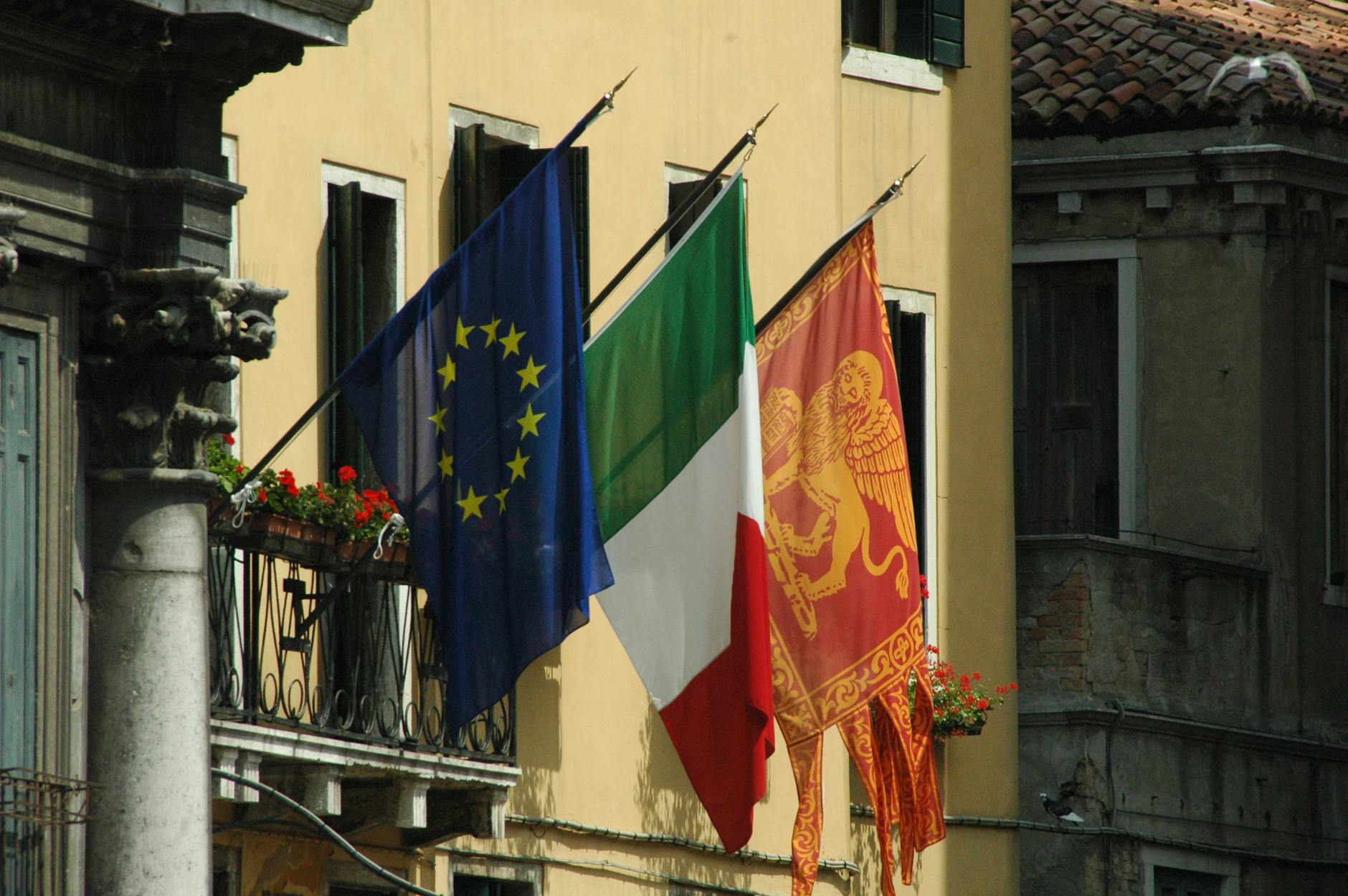 Photo by CARLOSCRUZ ARTEGRAFIA on Pexels
Fighting organised crime and managing migration
A large part of the meeting focused on transnational organised crime. The partners agreed to keep strengthening their joint response to criminal networks involved in migrant smuggling, human trafficking, and the trafficking of drugs and firearms. Much of that work runs through Europol and the European Multidisciplinary Platform Against Criminal Threats (EMPACT), and ministers stressed the need for an evidence-based, balanced approach that tackles both the supply of and the demand for illegal drugs.
Migration management was equally prominent. The EU urged its Western Balkan partners to bring their own visa policies closer into line with the EU list of visa-required countries, pointing to the proven effect that such alignment has on reducing irregular crossings along the Western Balkans route. Partners were also briefed on the rollout of the Entry/Exit System (EES) and the European Travel Information and Authorisation System (ETIAS), the two new border systems that will change how non-EU travellers are registered and pre-screened.
Justice in the digital age
The forum also looked ahead to the digital transformation of justice. Delegations exchanged views on the opportunities and risks of interoperable solutions and new technologies, including artificial intelligence, and the EU encouraged its partners to adopt or update e-justice strategies and make full use of available funds. Participants reviewed progress on cross-border judicial cooperation in criminal matters and the electronic evidence package, and were briefed on the Council of Europe's framework convention on artificial intelligence and human rights.
 Photo by Jeffry Surianto on Pexels
Why it matters for travellers
For most visitors, the headline from Budva is the continued preparation for EES and ETIAS across the wider region. As Western Balkan countries align their rules with the EU, travel and border procedures across the route become more consistent. If you want to understand the traveller-facing side of these systems, our overview of how ETIAS works explains the practical details.
Tags:
Source:
Image Sources:
- Header image: Photo by CARLOSCRUZ ARTEGRAFIA on Pexels
- Teaser image: Photo by Jeffry Surianto on Pexels