
News
Drones, Strikes and Travel Permits: Your Rights When European Flights Are Disrupted
European Union flag gently waving on a flagpole against a cloudy sky, symbolizing unity and patriotism.
Article content
Drones, Strikes and Travel Permits: Your Rights When European Flights Are Disrupted
A run of disruption has hit European aviation, from unauthorised drone activity closing airports such as Munich, Warsaw, Copenhagen and Oslo, to strikes by French air traffic controllers. In a single month, dozens of flights were diverted or cancelled, upending the plans of thousands of passengers. The good news is that most of those travellers are protected by robust air passenger rights rules.
 Photo by eberhard grossgasteiger on Pexels
Your rights to care and rerouting
If you are booked to fly from an EU or UK airport and your flight is cancelled, the carrier must provide an onward flight as soon as possible — on any airline with seats available, not just its own. Unless it can offer an alternative on the same day, you are entitled to be rebooked onto a rival. While you wait, the airline must provide meals as appropriate and, if necessary, a hotel.
These protections apply regardless of the cause of disruption — whether a power failure, drones launched by an unknown party, or a French air traffic control walkout. When flights are diverted to another country, the airline remains responsible for getting you to your final destination. The one notable exception is a non-EU or non-UK carrier flying from outside Europe.
Why the rules are under pressure
Airlines dislike these obligations because the cost falls on them whatever the cause, and those costs are open-ended. As incidents of disruption become more frequent, the financial burden grows. Travellers ultimately pay through higher fares, and there is a real prospect that rights could eventually be trimmed — perhaps by capping how long or how much care must be provided. For now, though, the protection remains strong, and it is worth knowing exactly what you are owed.
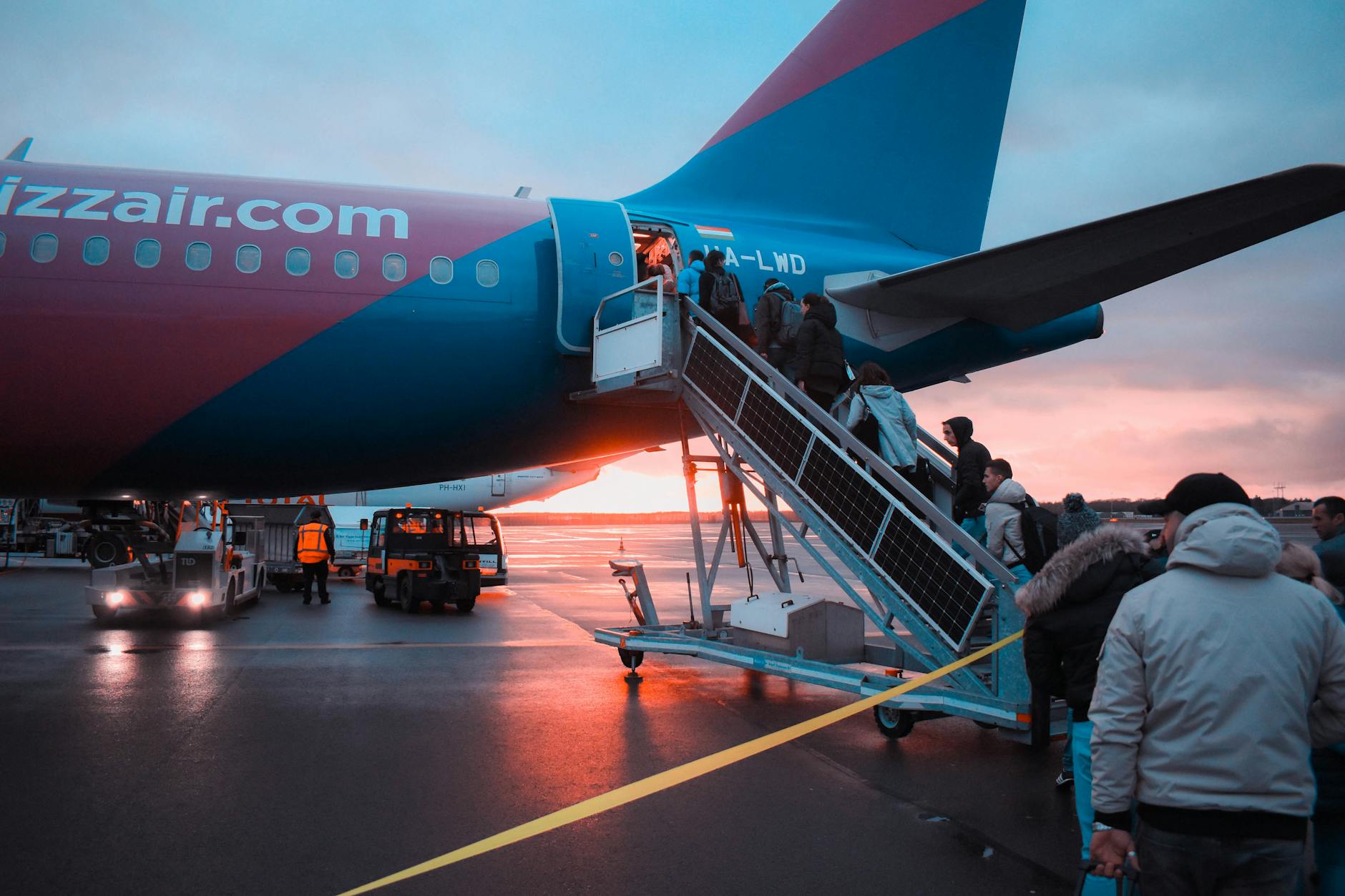 Photo by Longxiang Qian on Pexels
Transit, permits and being prepared
Disruption also raises practical questions about transit and travel permits. Passengers connecting between two points outside the EU through major hubs such as Paris CDG or Madrid generally stay airside and do not clear passport control, so they are not subject to the Entry/Exit System. But if a delay or diversion forces an unexpected change of route, the picture can shift quickly.
That is why being prepared with the right permits matters. A traveller holding a US ESTA and a Canadian eTA has more flexibility if plans change or a flight is rerouted, and the same logic will apply to the EU's ETIAS once it launches, expected around a year from now. Having an authorisation in place ‘just in case’ is sensible, particularly for those who frequently connect via European hubs. You can read an overview of how ETIAS will work to understand the requirement before it takes effect.
When an airline collapses mid-trip — as happened recently with Iceland's Play — the situation is harder, since stranded passengers may have to buy new tickets and rely on travel insurance. The broader lesson holds: understand your rights, keep your permits current, and build a little flexibility into long-haul itineraries.
Tags:
Source:
Image Sources:
- Header image: Photo by eberhard grossgasteiger on Pexels
- Teaser image: Photo by Longxiang Qian on Pexels