
News
What the EU's New Entry/Exit System Means for British Travellers
A silhouette of a person waiting at an airport terminal with large windows and seating.
Article content
What the EU's New Entry/Exit System Means for British Travellers
From 12 October 2025, British holidaymakers heading to the European Union will meet a new kind of frontier. The bloc's long-delayed Entry/Exit System (EES) finally begins its phased rollout, replacing the familiar thud of a passport stamp with fingerprints, a facial scan and a central digital record. The change is the biggest overhaul of Europe's external borders in a generation, and for the millions of UK passport holders who now count as visitors from outside the bloc, it is worth understanding before you travel.
 Photo by Amien on Pexels
What the Entry/Exit System actually does
EES is a digital border-management scheme that applies to "third-country non-visa nationals" — a clumsy phrase that, since Brexit, includes most British passport holders. Instead of an officer manually stamping your passport, every external Schengen frontier is wired into a single central database that logs when you enter and when you leave.
Brussels has three main aims. The system is designed to help identify suspected criminals, to combat identity fraud, and to enforce the rule that non-visa visitors may spend no more than 90 days in any rolling 180-day period. By recording each crossing automatically, the authorities no longer have to rely on officers counting ink stamps to work out whether someone has overstayed.
None of this is new in principle. EES was originally due to launch in 2021, but it slipped repeatedly as the EU agency responsible for the underlying technology struggled to get every member state ready at the same time. The version arriving now is being switched on gradually, phased in over 180 days from 12 October 2025 until 9 April 2026. Travellers should expect a mixed experience at first, with some borders fully operational and others still bedding the system in.
How it works at the border
The first time you cross into the Schengen area after the system goes live, you will be asked to register your biometrics: fingerprints (children under 12 are exempt) together with a facial image and your passport details. On later crossings within the validity period, you should usually only need the facial biometric. In practice, many early travellers report being asked for both fingerprints and a photo more than once, so a little patience may be required while staff and equipment settle in.
Crucially, the record is tied to the person, not the passport. Each new visit triggers a fresh three-year validity; if you do not cross an external border for three years, you simply register again on your next trip. Renewing your passport in the meantime does not wipe the slate clean.
Some of the most important checks happen on British soil, thanks to "juxtaposed" controls where EU officers operate in the UK. That means your first EES registration may take place at the Port of Dover, at the Eurotunnel LeShuttle terminal in Folkestone, or at Eurostar's departures in London St Pancras, where the French Police aux Frontières carry out the checks before you leave. Anyone travelling on an EU or Irish passport skips the EES process entirely. And reassuringly, EES itself is free — there is no payment to make simply to be registered.
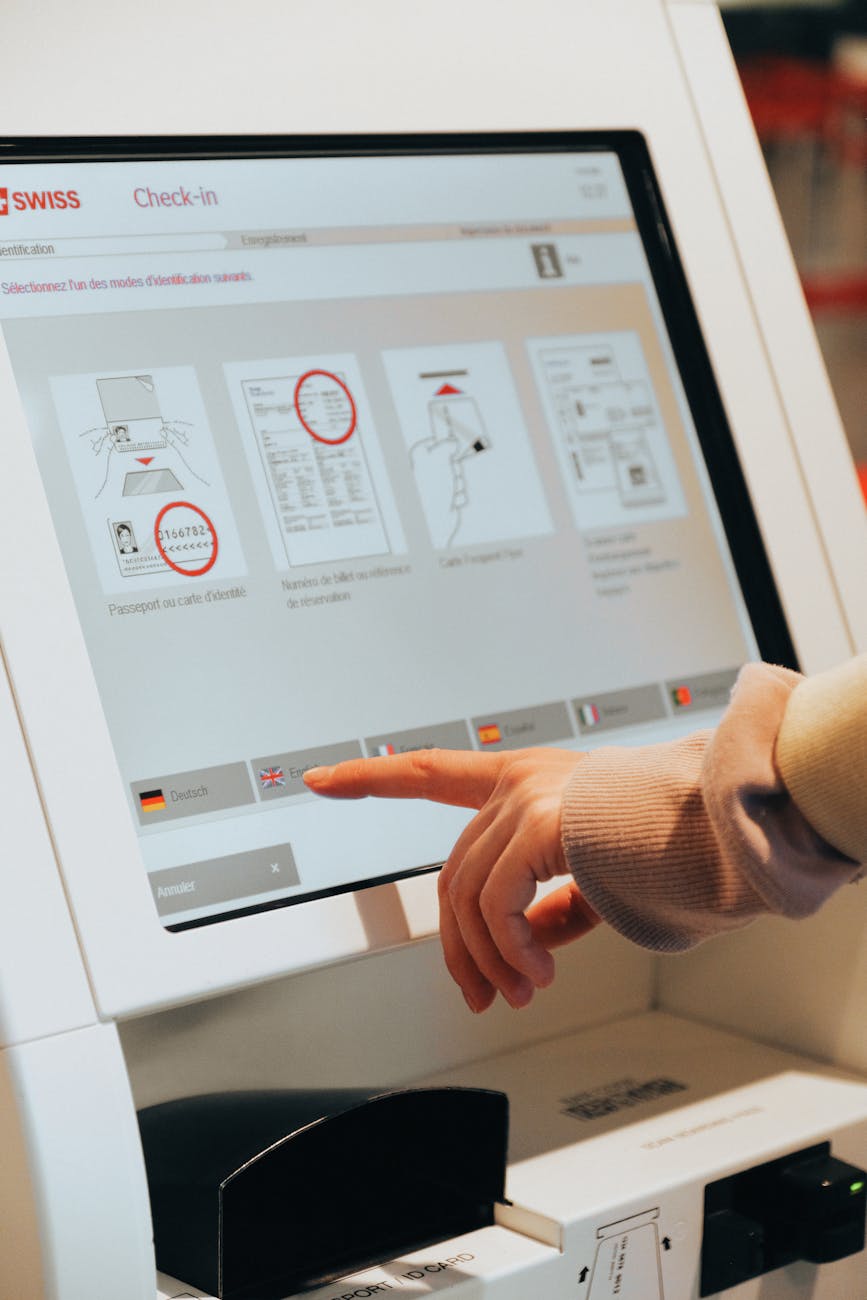 Photo by Anna Shvets on Pexels
ETIAS, the 90-day rule and what comes next
EES is often confused with ETIAS, but they are separate steps. ETIAS is an online travel permit — broadly similar to the United States' ESTA — that will eventually be required before you set off. It costs €20 (about £17), lasts three years, and is free for travellers under 18 or over 70. Importantly, ETIAS cannot begin until EES is up and running smoothly. Officials expect it to follow roughly six months after the border system beds in, and there is to be a six-month grace period after that, which means it may not become genuinely mandatory until 2027.
Whatever the paperwork, the underlying limit stays the same: as a UK visitor you cannot spend more than 90 days in any 180 within the Schengen zone. Time spent in the Republic of Ireland does not count, because Ireland is outside Schengen and Britons travel there under the long-standing Common Travel Area. If you are planning a longer European trip, it pays to track your days carefully and to prepare your travel authorisation in good time — you can begin your application through our ETIAS application service once the scheme opens. For now, the headline for autumn 2025 is simple: same 90-day allowance, but a smarter, biometric border to cross on the way in.
Tags:
Source:
Image Sources:
- Header image: Photo by Amien on Pexels
- Teaser image: Photo by Anna Shvets on Pexels