
News
What Is the Entry/Exit System? Key Questions on Biometrics, Costs and Border Delays
Still life of a digital COVID certificate, passports, and a leather wallet for travel documentation.
Article content
What Is the Entry/Exit System? Key Questions on Biometrics, Costs and Border Delays
New checks at Europe's external borders have come into force, and many travellers are unsure what the changes mean for their journeys. The EU's Entry/Exit System (EES) replaces manual passport stamping with a digital record of arrivals and departures, and it is being switched on gradually rather than all at once. Here are clear answers to the questions people are asking most.
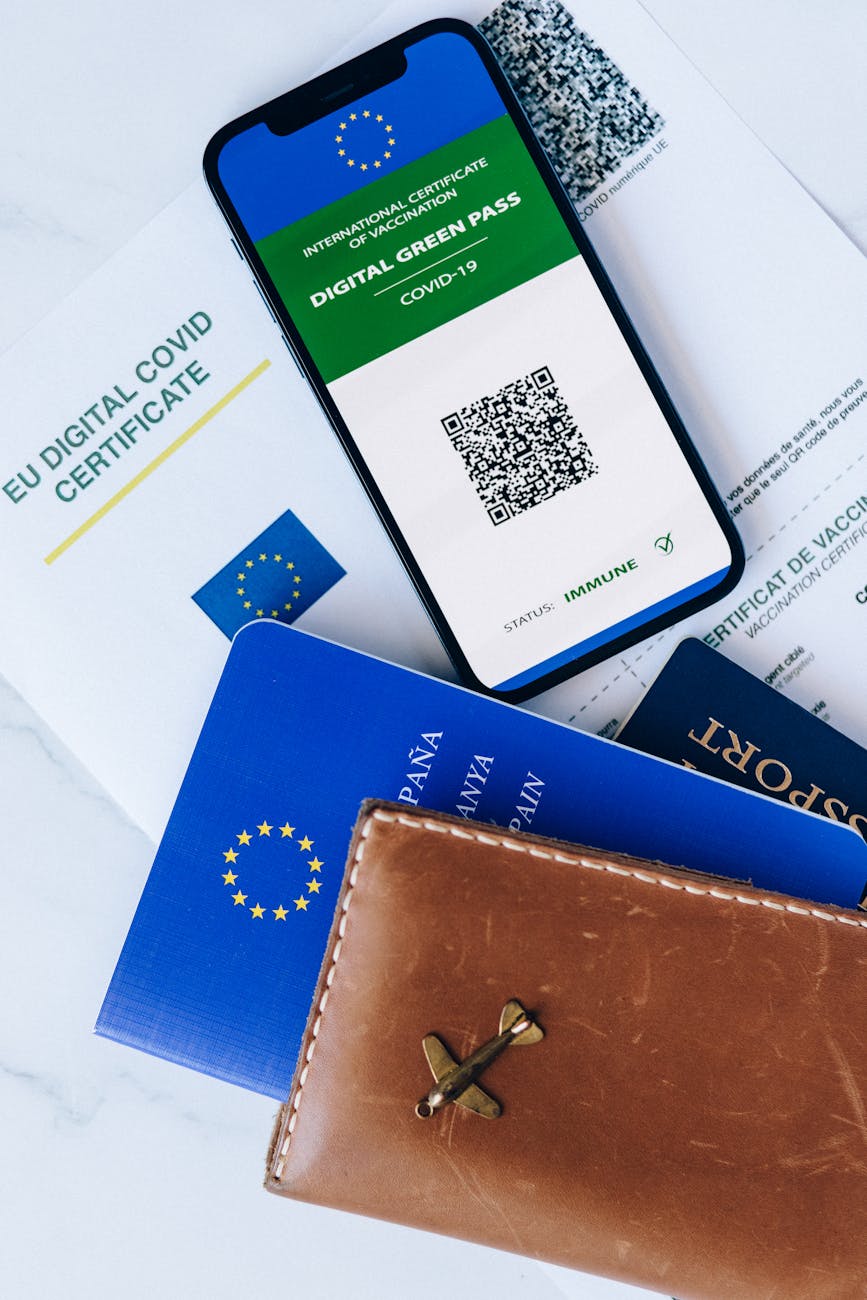 Photo by Nataliya Vaitkevich on Pexels
Who does EES apply to, and what does it involve?
Who does it apply to? EES covers people visiting or leaving one of the 29 countries in Europe's Schengen area. That is mostly the EU, together with Iceland, Liechtenstein, Norway and Switzerland. Ireland is not in the Schengen area, so it is not part of the system.
What does it involve? Travellers must register their biometric information — fingerprints are scanned and a photograph is taken — and answer questions about their visit, such as whether they have somewhere to stay, enough money for the trip and a return ticket.
What about children? All children must register, although those under 12 are exempt from giving fingerprints.
How much does it cost? EES is free for travellers.
How fast is it rolling out, and will there be delays?
The system is being introduced in stages. From the Sunday start, only one border point per country has to use EES. At least half of each state's border points should be operating it by January, with full activation for all eligible arrivals expected by 10 April.
Travellers have been warned to allow extra time. The Home Office urged people to expect "longer wait times at border control", while the Advantage Travel Partnership advised visitors heading to southern Europe to "allocate four hours".
To ease the pressure at British departure points, EES kiosks have been installed at London St Pancras, the Port of Dover and Eurotunnel's Folkestone terminal — where UK travellers pass French border checks before leaving. Passengers can complete some of the checks at these kiosks before meeting a human officer, and the Government provided £10.5 million for the infrastructure.
 Photo by Werner Pfennig on Pexels
How long does it last, and what about ETIAS?
How long do registrations last? Each registration is valid for three years. Any further crossing within that period requires the traveller's fingerprints and photograph to be verified again, a step that is expected to be quicker than the first registration.
Why is the EU introducing it? The stated aim is to improve border security by reducing illegal migration and making it easier to detect people who overstay their permitted time.
What about ETIAS? A separate scheme, the European Travel Information and Authorisation System (ETIAS), will become an entry requirement for visitors to the Schengen area. It is scheduled to arrive late next year and will cost 20 euros (£17) for adults under 70, remaining valid for up to three years or until the holder's passport expires. If you are still unsure how these overlapping changes affect your own trip, our answers to common ETIAS and EES questions are a good place to start.
Tags:
Source:
Image Sources:
- Header image: Photo by Nataliya Vaitkevich on Pexels
- Teaser image: Photo by Werner Pfennig on Pexels