
News
What the EU Entry/Exit System Means for Business Travellers
A Volotea commercial airplane flying through a cloudy sky, captured from below.
Article content
What the EU Entry/Exit System Means for Business Travellers
After years of delay, the European Union's Entry/Exit System (EES) finally came into force on Sunday 12 October 2025. First proposed in 2016 and originally due to start in 2022, the system replaces the manual stamping of passports with an automated, biometric record of every crossing made by non-EU passport holders.
For people who travel to Europe regularly for work, the change is significant. EES does not add a fee, but it does alter what happens at the border itself — and over time it makes the Schengen area's short-stay rules far easier to enforce.
 Photo by Miguel Cuenca on Pexels
How EES works and what it costs
There is no charge for EES. On a traveller's first entry under the system, border officials capture biometric data — a facial image and fingerprints — alongside passport details and the date and place of entry and exit. That record is then stored for three years, so on later trips you simply provide a fingerprint or photo to be matched against the file. A new passport means a fresh registration.
The rollout is being phased in progressively over roughly six months rather than switched on overnight. Initially the EU asked member states to run EES at only a share of border points, with biometrics not yet mandatory, before scaling up toward full operation across the external border by 10 April 2026. In practice, that means a mixed experience for now: some terminals will register you biometrically while others continue to stamp passports manually if queues build.
Who is affected and where you register
EES applies when entering 25 EU countries — excluding Cyprus and Ireland, which are outside the Schengen area — plus Norway, Iceland, Switzerland and Liechtenstein. All UK passport holders must register, although children under 12 are exempt from giving fingerprints and Irish passport holders are not covered at all, a useful detail for anyone with dual UK/Irish nationality. The system works with both biometric and non-biometric passports.
Registration normally happens on EU territory, but travelling from the UK by Eurostar you register at London St Pancras, because you enter EU territory in the station's departure area. The same applies to LeShuttle at Folkestone and to ferry passengers leaving Dover, where self-service kiosks and dedicated processing zones have been built to handle the checks.
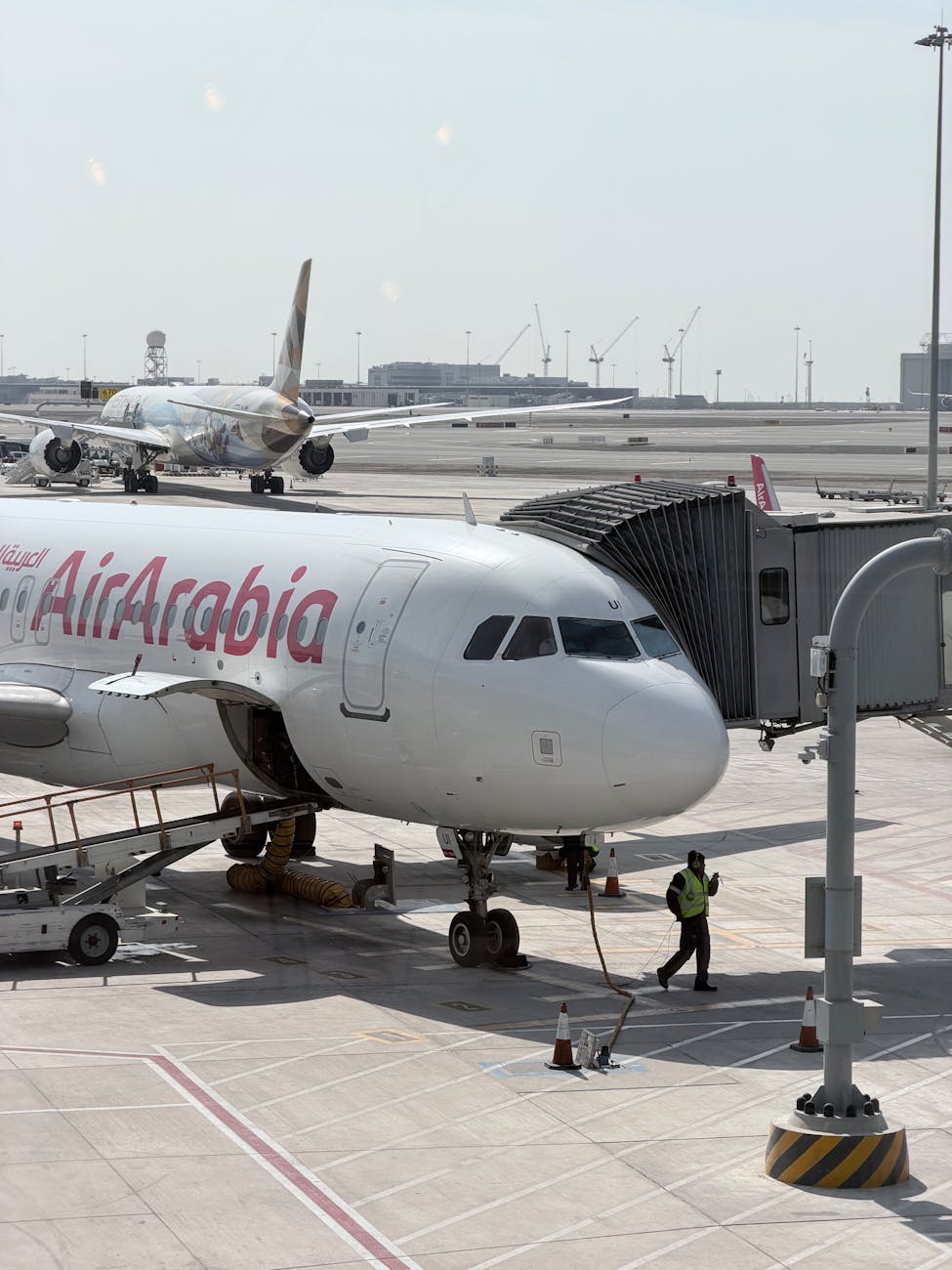 Photo by Khojiakbar Teshaboev on Pexels
What it means for frequent flyers — and how ETIAS fits in
Once you are registered, the days of waiting for a manual stamp are over, which should speed up routine arrivals. The trade-off is that EES makes it much easier for authorities to spot travellers who breach the 90 days in any 180-day period limit — a real consideration for executives who shuttle frequently to Europe or keep a second home there. Transit passengers who never formally enter a country, and onward travel within the Schengen area, are not subject to fresh checks.
EES should not be confused with ETIAS, the EU's forthcoming travel authorisation, which is entirely separate and expected to start in the last quarter of 2026. ETIAS will require visa-exempt travellers to obtain an online authorisation before departure — its fee has risen from €7 to €20 — and it will be valid for three years or until the passport expires. For a fuller picture of how these systems connect, see our overview of ETIAS and EU border changes.
Tags:
Source:
Image Sources:
- Header image: Photo by Miguel Cuenca on Pexels
- Teaser image: Photo by Khojiakbar Teshaboev on Pexels