
News
Balkan Truckers' EES Blockade Threat Put Summer Travel in Focus
Airport terminal with digital flight information boards showing arrivals and departures.
Article content
Balkan Truckers' EES Blockade Threat Put Summer Travel in Focus
A protest by Balkan lorry drivers turned the spotlight onto the European Union's new digital border. On the day in question, frontiers between the Schengen area and the Balkan nations of Serbia, Bosnia, Montenegro and North Macedonia were set to be blockaded by truckers unhappy about the potential effect of the Entry/Exit System (EES) on their livelihoods. The dispute is a reminder that the way Europe records border crossings is changing for everyone, not just holidaymakers.
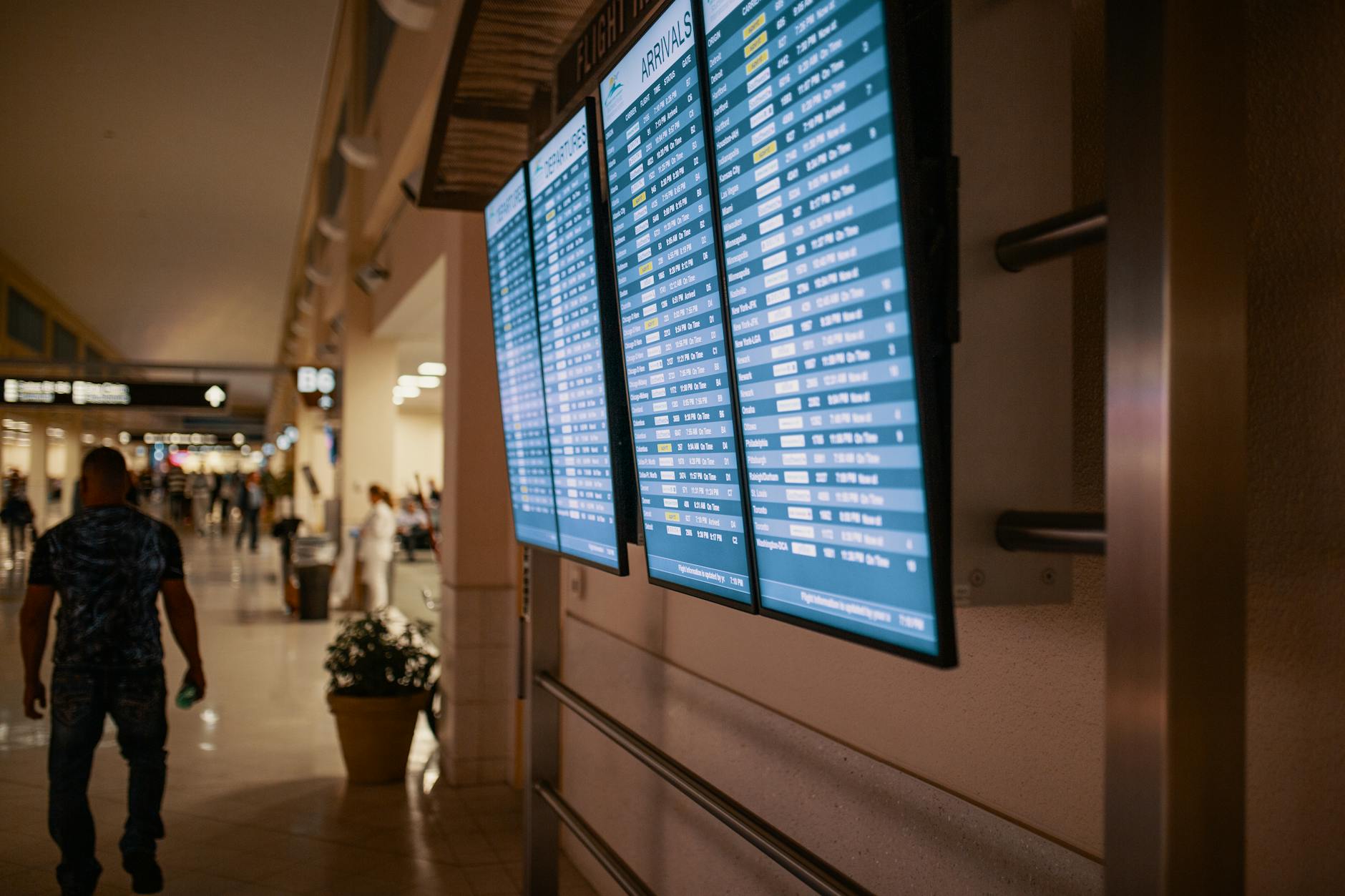 Photo by Josh Sorenson on Pexels
Why the truckers were protesting
At first glance the grievance seems puzzling. A driver shuttling between, say, Belgrade and Budapest spends roughly half the journey inside the EU and half outside, and with days off would rarely approach the 90-days-in-180 limit for short stays. The problem, according to a well-placed European source, is that drivers from these Balkan nations often do far more than shuttle back and forth: they may spend weeks at a time working inside the European Union.
Under the old analogue system, the 90/180-day rule was not scrupulously enforced by hard-pressed border officials. Digital data, however, cannot be brushed aside. That is why a group of workers threatened to halt freight movements in protest at legislation only weeks from being fully enforced.
What the EES changes
One aim of the EES is to stop people staying longer than the law allows. The scheme records each traveller's entries and exits on a central database, which can instantly calculate whether someone has overstayed. Fingerprints and facial biometrics are captured to prevent workarounds – for example, someone with two non-EU passports exiting on one document and re-entering on the other.
By 9 April, all frontiers were required to be running the EES for every third-country national. The branch of the Brussels administration responsible for delivering it insisted the scheme was taking root as expected and remained on schedule, and that a drivers' blockade alone would not halt the roll-out.
 Photo by Kata Pal on Pexels
What it means for summer travel
For holidaymakers, the concern is congestion. The new biometric checks had already been linked to waits of up to three hours at some European airports, and the Foreign Office advised travellers in the region to check local media and plan ahead to avoid disruption. The length of the queues this summer could hinge on whether such protests spread – or whether they become the tipping point that pushes authorities to pause and reconsider the timetable. Either way, it is worth understanding how the EES works before you set off.
Tags:
Source:
Image Sources:
- Header image: Photo by Josh Sorenson on Pexels
- Teaser image: Photo by Kata Pal on Pexels