
News
European Council Adoption of ETIAS Set the Legal Framework for Pre-Travel Checks
Flat lay image of a health passport with a COVID-19 QR code, calendar, and map.
Article content
European Council Adoption of ETIAS Set the Legal Framework for Pre-Travel Checks
On 5 September 2018, the Council of the European Union adopted the regulation establishing the European Travel Information and Authorisation System (ETIAS). The decision marked a significant step in the EU's effort to tighten control of its external borders while keeping travel smooth for visitors who do not need a visa.
"ETIAS is an important tool to reinforce the control of the EU's external border and the protection of our citizens," said Herbert Kickl, then Austria's Minister of the Interior, whose country held the Council presidency. The system, he noted, would allow authorities to identify people who might pose a security risk before they reach the Union and, where necessary, refuse them authorisation to travel.
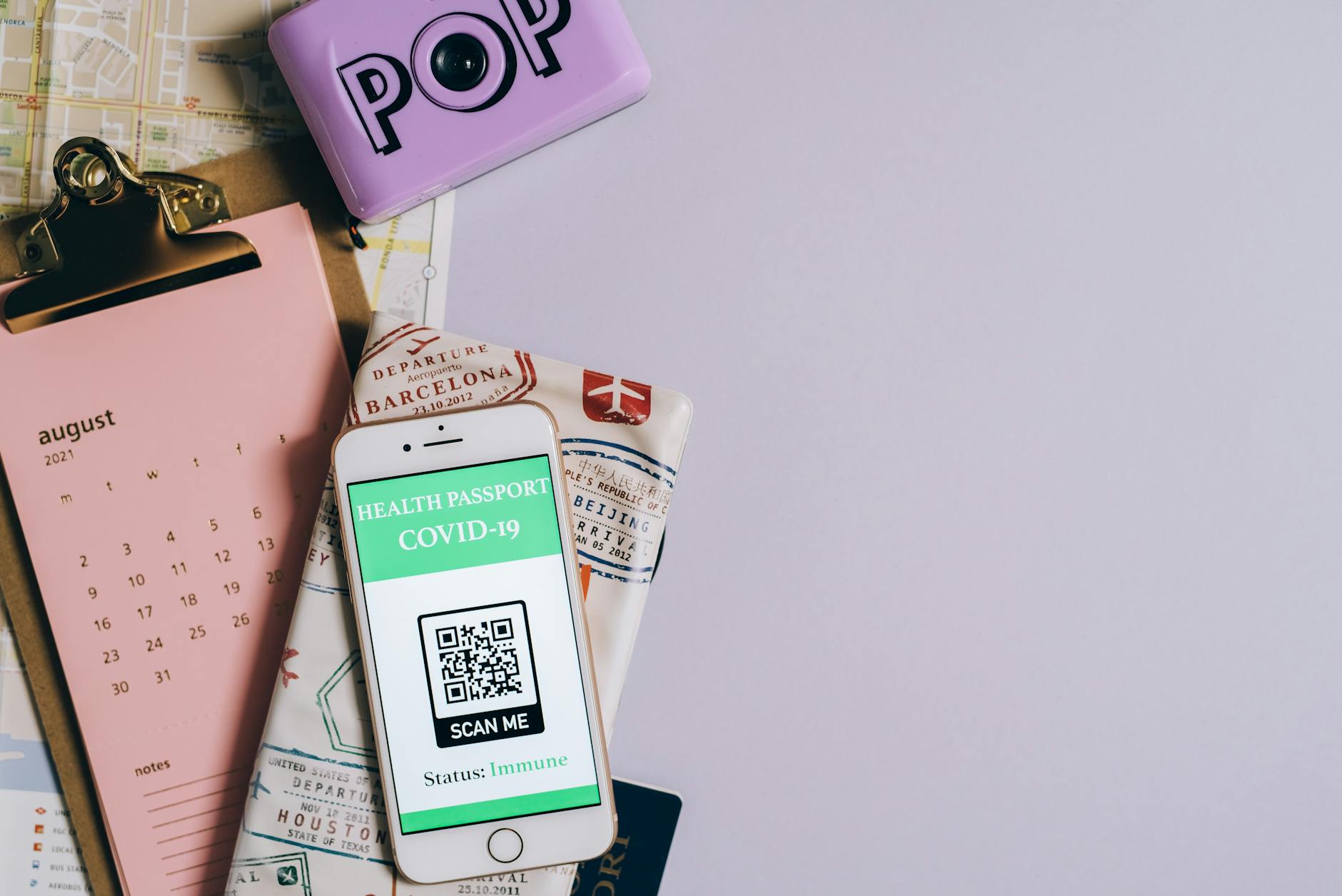 Photo by Leeloo The First on Pexels
What the new system will do
ETIAS will apply to visa-exempt third-country nationals, who will need to obtain a travel authorisation before their trip by completing an online application. For each application, the applicant will pay a travel authorisation fee of 7 euros.
The information submitted will be processed automatically against EU databases and relevant Interpol records to determine whether there are grounds to refuse authorisation. If no hits or elements requiring further analysis are found, the authorisation will be issued automatically and quickly, which is expected to be the case for the vast majority of applicants.
How applications will be processed
Where a hit or an element requiring analysis is detected, the application will be handled manually. The ETIAS central unit will first check whether the data in the application matches the data that triggered the hit; if it does, or if doubts remain, the file will be passed to the ETIAS national unit of the responsible member state. A decision on such cases will be taken no later than 96 hours after submission, or 96 hours after any additional information requested has been received.
Before boarding, air and sea carriers will have to check that travellers subject to the requirement hold a valid authorisation. Three years after ETIAS enters operation, the same obligation will extend to international coach operators carrying passengers overland. Importantly, the authorisation will not grant an automatic right of entry: the final decision always rests with the border guard.
 Photo by Corina Constantinov on Unsplash
Next steps and timeline
A travel authorisation will be valid for three years, or until the end of validity of the travel document registered during the application, whichever comes first. Following adoption, the Council and the European Parliament were due to sign the regulation, after which the signed text would be published in the EU Official Journal and enter into force 20 days later. eu-LISA, the EU agency for large-scale IT systems, was then expected to begin building the system, which should become operational by 2021. To see how the framework agreed in 2018 has taken shape, read our ETIAS overview.
Tags:
Source:
Image Sources:
- Header image: Photo by Leeloo The First on Pexels
- Teaser image: Photo by Calvin Seng on Pexels