
News
Dover Says EU Entry Checks Will Add Only ‘Minutes' to Journeys, Not Hours
Woman wearing a face mask checks her phone at an airport during pandemic times.
Article content
Dover Says EU Entry Checks Will Add Only ‘Minutes' to Journeys, Not Hours
Europe's new Entry/Exit System (EES) will add only minutes to the journey time for motorists boarding ferries at Dover, the port's chief executive has told The Independent — a marked contrast to earlier warnings of queues lasting many hours.
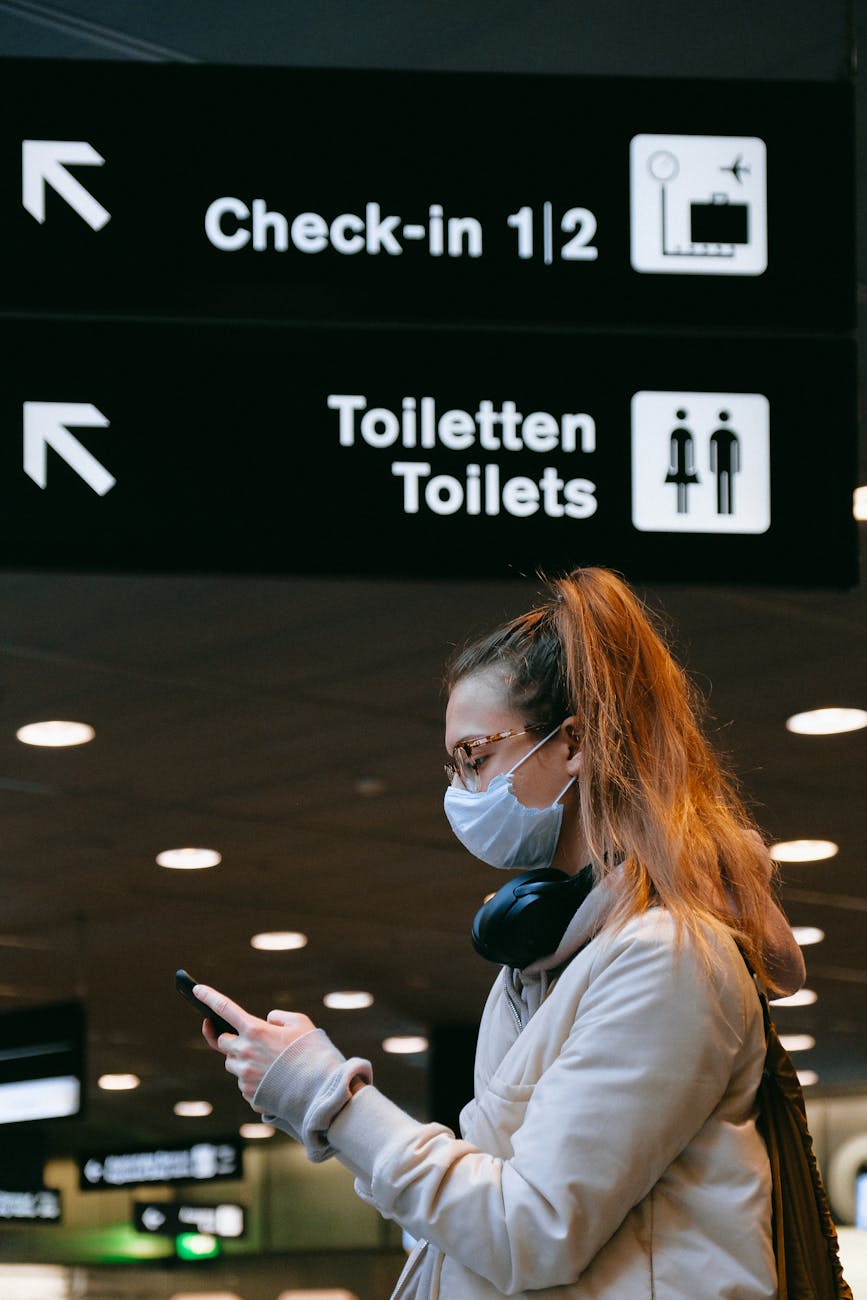 Photo by Anna Shvets on Pexels
From hours of queues to minutes
The much-delayed border scheme will require each British traveller entering the EU to be fingerprinted and to register a facial biometric before passing through passport control, which at Dover takes place on UK soil. The Eastern Docks, from where ferries depart for Calais and Dunkirk, were never designed for intensive checks, and after Brexit the UK negotiated for its citizens to become ‘third-country nationals' whose passports are scrutinised and stamped on every crossing.
Council leaders in Kent had warned of queues of more than 14 hours once EES is in force at Dover and the nearby Eurotunnel terminal. But chief executive Doug Bannister said the new process will add only minutes for departing travellers, thanks to a new registration venue and a ‘continental corridor' through the town approved by the EU and French authorities.
How the new kiosk system works
Rather than relying on staff with handheld tablets, Dover has switched to a kiosk-based approach. Outbound motorists and passengers who have not previously registered will be directed to a new compound being built on reclaimed land at the Western Docks, about a mile from the ferries. There, drivers and passengers park, get out and register their fingerprints and facial biometrics at an array of kiosks that also capture passport details.
 Photo by Pixabay on Pexels
Once registered, motorists follow the A20 through Dover to the Eastern Docks, where French Police aux Frontières carry out passport checks as normal — a process that should be brief, since each occupant is already registered. Modelling by the port suggests registration could take around six minutes per car, followed by an eight-minute drive between the two sites.
Security, capacity and what comes next
Splitting a two-stage border check across a mile raises a security question: could unregistered passengers join a vehicle en route? To address this, AI will monitor the ‘continental corridor' for unusual activity. If a vehicle arrives within the expected eight-minute window, it is likely fine; if a journey that should take eight minutes takes 28, it could be flagged for further checks by the Police aux Frontières.
Bannister said the facility is built around a ‘magic number' of 600 non-European cars per hour at peak, with capacity for well over 800 at full efficiency and around 650 even at 80 per cent. EES is due to be introduced in the autumn with a progressive rollout, giving the port time to refine its processes before peak periods such as Christmas, half-term and the summer of 2026. The ETIAS online permit for British visitors will follow no earlier than six months after the full EES is running well — October 2026 at the earliest — and will not be mandatory before April 2027. Travellers can read an overview of how EES and ETIAS fit together to know what to expect.
Tags:
Source:
Image Sources:
- Header image: Photo by Anna Shvets on Pexels
- Teaser image: Photo by Pixabay on Pexels