
News
Post-Brexit EU Border Checks: What the EES Timeline Means for Travellers
A low-angle shot of a departure board at an airport
Article content
Post-Brexit EU Border Checks: What the EES Timeline Means for Travellers
The EU's post-Brexit Entry/Exit System (EES) has long been described as arriving in 'late 2024'. At the time, a UK news report went further, citing Eurotunnel to suggest a start date of 6 October 2024, although the European Commission's home affairs department did not confirm it. Originally slated for 2022, the system had already been put back multiple times, and travellers were keen to understand what it would mean in practice.
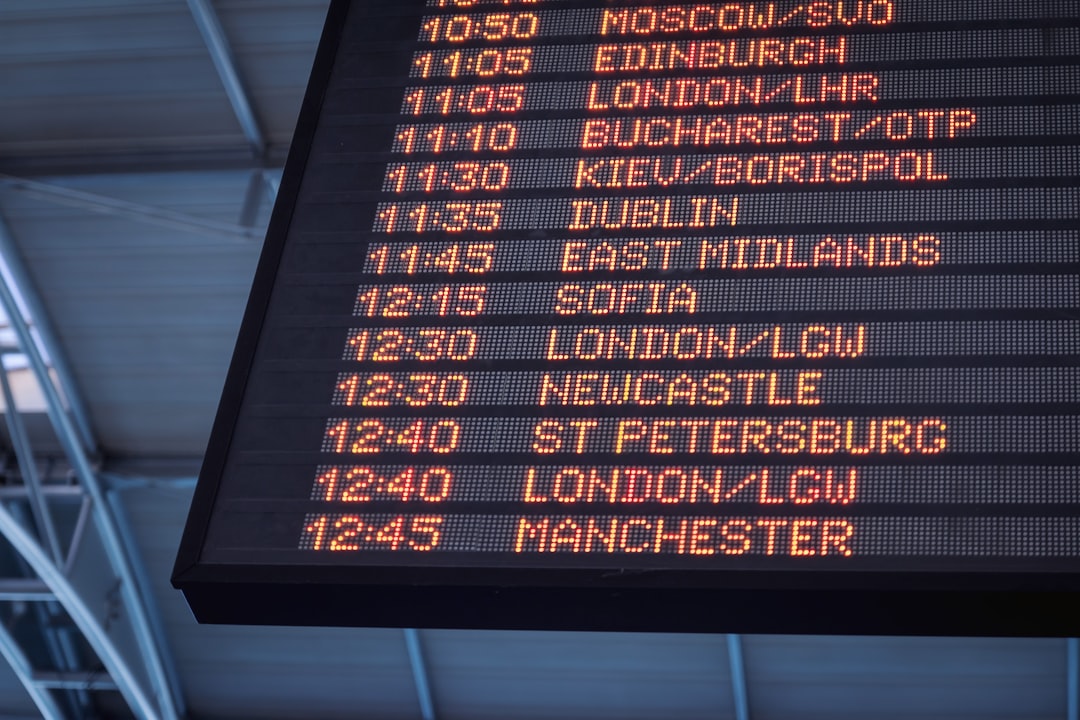 Photo by JESHOOTS.COM on Unsplash
What the EES is
The EES is an automated registration system for UK and other non-EU travellers who do not require a visa to enter the EU. Each time they cross an external EU border, travellers will scan their passport or travel document at a self-service kiosk. The system registers the traveller's name, biometric data and the date and place of entry and exit, with facial scans and fingerprint data retained for three years after each trip. It does not apply to legal residents or to those holding long-stay visas.
The EES will operate when entering all EU member states except Cyprus and Ireland, as well as the four non-EU Schengen countries: Iceland, Liechtenstein, Norway and Switzerland. Its purpose is to bolster border security and to identify travellers who overstay the 90 days permitted within any 180-day period. Delays were largely attributed to challenges with contractors meeting deadlines, since barriers and kiosks must be installed across land, sea and air borders.
How ETIAS fits in
The EES is connected to the European Travel Information and Authorisation System (ETIAS), which obliges non-EU citizens who do not require a visa to obtain travel authorisation before entering the bloc. Originally expected to be operational from November 2023, ETIAS was, at the time of reporting, endorsed for the first half of 2025. Travellers will apply online for a fee of €7, and once approved the authorisation is linked electronically to the passport and lasts three years.
 Photo by Natasa Dav on Pexels
What it means for travel
Industry groups — including airports council ACI Europe, Airlines for Europe, the European Regions Airline Association and IATA — broadly supported the delays, arguing they gave more time to prepare and resolve outstanding issues so passengers would not face disruption. There were nonetheless concerns about longer queues, with French authorities set to operate EES checks at the UK's Port of Dover, on Eurostar and at Eurotunnel, working with the UK government to minimise the impact on border flows. The Commission also suggested the system might need to be introduced gradually and flexibly to reduce the risk of long waits. For a fuller picture of how these systems work together, see our ETIAS overview.
Tags:
Source:
Image Sources:
- Header image: Photo by JESHOOTS.COM on Unsplash
- Teaser image: Photo by Natasa Dav on Pexels