
News
The Major New EU Red Tape Facing British Travellers: Why EES Comes Before ETIAS
a large jetliner flying through a blue sky
Article content
The Major New EU Red Tape Facing British Travellers: Why EES Comes Before ETIAS
Many travellers are asking the same question: what new red tape is the European Union imposing on British visitors? The EU has long promised that its transformational Entry/Exit System (EES) is shortly to start. After that, the next step in tighter border controls is due to be ETIAS, the European Travel Information and Authorisation System. But after a number of conflicting announcements from Brussels, there is understandable confusion about exactly what is planned, and when.
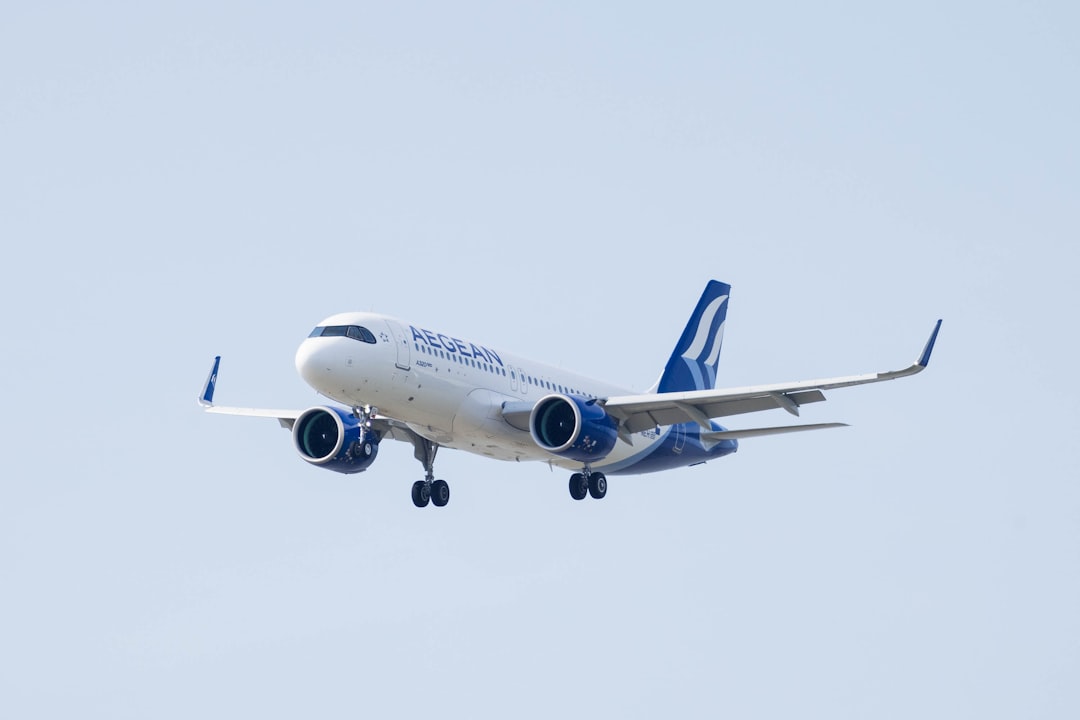 Photo by Edoardo Bortoli on Unsplash
What is the EES, and how will it work?
The European Commission describes the EES as "an automated IT system for registering non-EU nationals travelling to the EU for a short stay." Many countries are digitising their borders, and Europe is doing so on a grand scale across the entire Schengen Area, which means all EU nations except Cyprus and Ireland, plus Iceland, Norway and Switzerland. Instead of "wet-stamping" passports, the system creates a central database that interacts with frontier posts at airports, seaports, railway stations and road crossings.
From the traveller's point of view, the process is straightforward. On first entry with a given passport, your personal details, a facial biometric and fingerprints are taken and transmitted to the central database. When you leave the Schengen Area, departure is recorded, though only one biometric, almost certainly the face, is used. This is then repeated for each entry and exit for the life of the passport. The EES will not be used at internal frontiers within the Schengen Area, only at its external border.
When will it start, and how much delay should travellers expect?
No one knows the exact date, or at least they are not saying. The whole project has been characterised by missed deadlines, the most embarrassing in 2024. In August that year the EU vowed the EES would launch on 10 November 2024 in a "big bang" at all frontiers. Exactly a month before, the European Commission quietly revealed it had been postponed indefinitely. A meeting of the Justice and Home Affairs Council later revealed a plan to roll out the EES in a phased manner to ensure a smooth transition, meaning the original "big bang" approach has been dropped.
Some member states have warned that fingerprinting and photographing travellers could quadruple the time taken for each non-Schengen arrival. Yet the Commission now says the plan is to "scan the fingerprints or take a photo of those crossing the border for the first time." The key word is or rather than and: as experience with US border control shows, facial recognition is now so advanced that fingerprints are no longer routinely required, which should keep the process smoother than feared.
 Photo by Lucas Allmann on Pexels
What about ETIAS, and what do I need to do now?
ETIAS is the next step in tightening frontier controls: an online permit for third-country nationals who do not require visas. It is similar to the US ESTA scheme but cheaper, at €7, and valid for longer, at three years. Travellers under 18 or over 70 will still need to hold an ETIAS, but it will be free. Crucially, ETIAS requires the EES to be fully operational first. Once the entry-exit system has been running for six months, ETIAS is due to be introduced, followed by a further six-month grace period, so it will not be mandatory for at least a year after EES is complete.
For now, British travellers do not need to do anything differently. There will be plenty of warning ahead of any change that affects UK passport holders, and anyone fortunate enough to hold an Irish or other EU passport can relax entirely, as nothing will change for them. If you would like a clear, up-to-date picture of how these two systems fit together before your next trip, the ETIAS and EES overview sets out the sequence and the likely timeline in plain terms.
Tags:
Source:
Image Sources:
- Header image: Photo by Edoardo Bortoli on Unsplash
- Teaser image: Photo by Lucas Allmann on Pexels