
News
Europe's EES Border System in 2026: What UK Travellers Need to Know
Crowded hallways and directional signs guide travelers in Delhi Airport.
Article content
Europe's EES Border System in 2026: What UK Travellers Need to Know
Weeks after the European Union's Entry/Exit System (EES) was meant to be in full operation, the rollout looks anything but uniform. Some Schengen nations are processing third-country nationals — including the British — strictly by the rules, capturing fingerprints and a facial image at every crossing. Others have quietly stepped back: Greece, notably, has dropped the biometric demand for UK visitors, either indefinitely or at peak times when queues threaten to overwhelm staff.
The old-fashioned "wet stamping" of passports was supposed to end by 10 April 2026, yet it continues at a number of frontiers. For anyone holding a British passport and planning a European trip this summer, the result is a confusing patchwork in which the experience at the border depends heavily on where — and when — you happen to be travelling. A family flying into one airport may sail through in seconds, while neighbours crossing by ferry the same week find themselves stuck in a registration queue that barely moves.
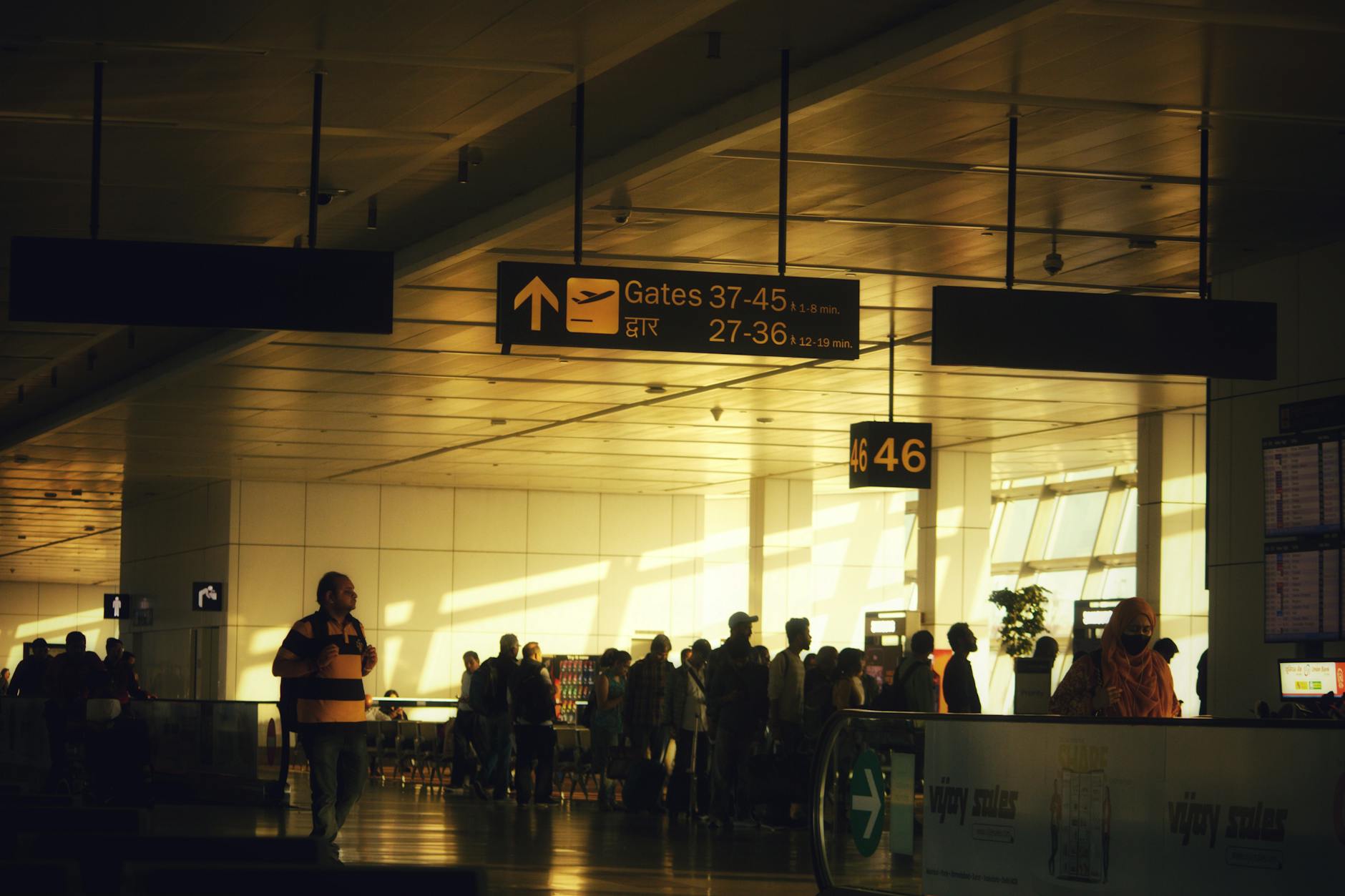 Photo by Omkar Pendsay on Pexels
What EES actually is
EES registers third-country nationals such as the British every time they cross an external Schengen frontier, whether at an airport, a land border or a port. Schengen covers the EU minus Ireland and Cyprus, plus Iceland, Norway and Switzerland. The system is designed to identify suspected criminals, combat identity fraud and enforce the rule that limits visitors to 90 days in any 180-day period.
On a traveller's first encounter, EES records four fingerprints from the right hand — children under 12 are exempt — alongside a facial biometric. On later trips, in theory just one biometric (the face) should be enough, though in practice travellers report being asked for both again and again. The point of all this data collection is partly to replace the manual passport stamp with an automated count of every entry and exit, making the 90-day allowance far harder to overstay unnoticed. Brussels argues the scheme is already proving its worth: since it began on 12 October 2025, the European Commission says the first five months saw more than 44.5 million entries and exits registered, over 24,000 refusals of entry, and more than 600 people assessed as security threats.
Where it's going wrong
The trouble is that each member state interprets the system in its own way. Kiosks have been installed across the bloc, but there are well-documented problems connecting them to the central database. The three UK "juxtaposed" sites — Eurotunnel's LeShuttle at Folkestone, the Port of Dover and Eurostar at London St Pancras — built costly registration areas that now stand largely idle, reportedly because of connectivity issues on the French side. Over the late-May bank holiday, traffic at Dover gridlocked for hours until officials reverted to analogue passport checks and the queues finally eased.
In practice, that means travellers may meet one of four very different scenarios. You might face full biometric registration at a kiosk; you might be asked to give your face and fingerprints all over again; you might get nothing more than a passport scan at a busy or malfunctioning frontier; or, as in Greece, you might be waved through with no biometrics at all. The inconsistency makes it almost impossible to predict how long the border will take, which is precisely the uncertainty that airlines and ferry operators had warned about long before the system went live.
 Photo by chickenbunny on Pexels
Delays, warnings and what comes next
At airports, the strain has shown up as long queues on both entry and exit, and some departing passengers have missed flights altogether. Aviation leaders representing airports and airlines have jointly warned of "unprecedented strain" and urged the Commission and member states to fully or partially suspend EES "where operationally necessary" during summer 2026, citing border-staff shortages, kiosk technical and maintenance issues, and concerns about the central IT system. The Commission counters that, when the system is operating well, it takes only 70 seconds to register an entry or exit.
Then there is ETIAS, the visa-waiver permit that has yet to arrive. The Commission insists ETIAS will start operations in the last quarter of 2026, but that timetable looks unlikely, since the permit depends on EES running smoothly for at least six months first — and the EU has promised to announce a specific start date several months in advance. Until then, British travellers should keep an eye on official updates and, when the scheme does go live, be ready to complete your ETIAS application well before booking summer travel. For now, the smartest move is to pack patience, allow extra time at the border, and check the rules for your specific route before you set off.
Tags:
Source:
Image Sources:
- Header image: Photo by Omkar Pendsay on Pexels
- Teaser image: Photo by chickenbunny on Pexels