
News
UK ETS and CORSIA Enforcement Update: What the Environment Agency Changed
Passenger jet preparing for boarding at Orio al Serio Airport in Lombardia, Italy.
Article content
UK ETS and CORSIA Enforcement Update: What the Environment Agency Changed
The Environment Agency has finalised changes to its enforcement and sanctions policy so that it explicitly covers two carbon schemes that affect aviation: the UK Emissions Trading Scheme (UK ETS) and the Carbon Offsetting and Reduction Scheme for International Aviation (CORSIA). The update followed a public consultation and a formal response published in December 2024.
For airlines and aircraft operators, the change is administrative rather than a new obligation, but it clarifies how the regulator will respond when carbon-related rules are not met.
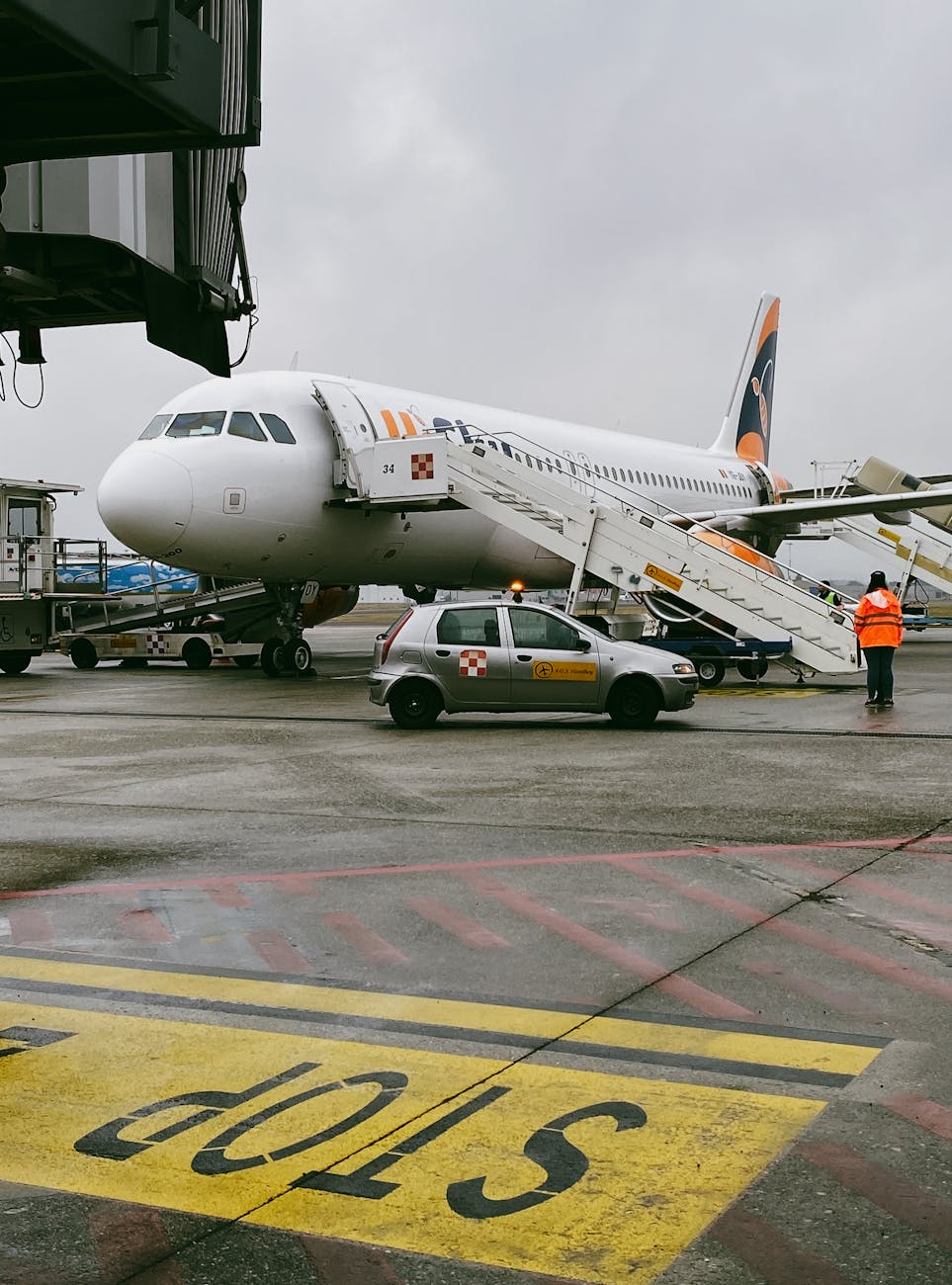 Photo by Alex Kalinin on Pexels
The two schemes behind the change
The UK ETS took effect on 1 January 2021, at the point the United Kingdom stopped participating in the EU Emissions Trading System. It places a cap on greenhouse gas emissions from covered sectors, including aviation, and requires operators to surrender allowances for what they emit.
CORSIA, the global aviation offsetting scheme, came into effect on 1 January 2019 and was transposed into UK law through a 2021 order. It requires airlines to monitor international flight emissions and offset growth above a baseline. Because both schemes carry compliance duties, the Environment Agency needed to make sure its enforcement policy referred to them directly.
What the consultation decided
The Agency ran its consultation for eight weeks, from 21 May to 16 July 2024, asking for views on proposed revisions. As a result of the responses received, it published an updated enforcement and sanctions policy and an accompanying annex.
The key practical outcome is that Annex 2 of the policy — which sets out the Agency's approach to climate change civil penalties — now contains two new sections: Section G for the UK ETS and Section H for CORSIA. The main body of the policy was also amended to reference the two schemes where relevant.
 Photo by Anthony DELANOIX on Unsplash
Why it matters for the aviation sector
On its own, the update does not change emissions targets or the price of allowances. What it does is give the regulator a clearer, documented basis for applying civil penalties when operators fall short of their UK ETS or CORSIA duties. That clarity matters for compliance teams, who can now point to specific policy sections when assessing risk.
More broadly, the change is a small but telling sign of how aviation's carbon obligations are being woven into routine regulatory enforcement, rather than treated as a separate, experimental regime. For operators, the message is to keep monitoring, reporting and surrendering on schedule, because the consequences of getting it wrong are now set out in black and white.
Tags:
Source:
Image Sources:
- Header image: Photo by Alex Kalinin on Pexels
- Teaser image: Photo by Anthony DELANOIX on Unsplash